
About the club
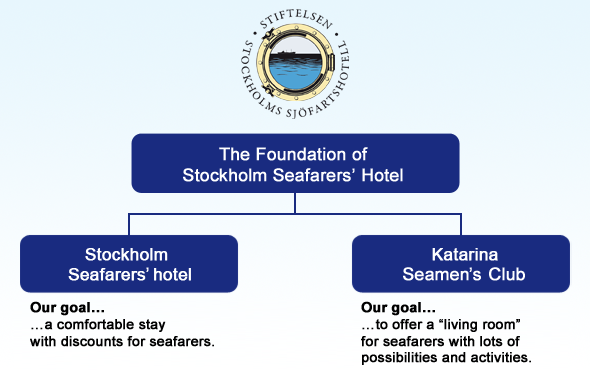
The Stockholm Maritime Hotel Foundation is a financially independent, non-profit foundation with the purpose of operating a hotel for seafarers and in connection therewith arranging various forms of leisure activities for seafarers. The overall task of the foundation is thus to improve the social conditions for seafarers when they are ashore. The board of the foundation has to decide on appropriate and necessary measures to achieve this goal.
The foundation's operations are located at the property, Prinsen 17 (Sjöfartshotellet). The operations consist of hotel operations with discounted accommodation for seafarers at Sjöfartshotellet in Stockholm and club activities at Katarina Sjöfartsklubb housed in Sjöfartshotellet.
The foundation strives to develop its service to seafarers as the conditions and thus the needs of the shipping industry change. This is done partly through continuous contacts with the target group in connection with the activities of the club and partly through study visits and by participating in seminars/meetings with other parties in the shipping industry. In addition, a lot of information is obtained through close contact and cooperation with a whole range of organizations active in the shipping industry.
What the club offers
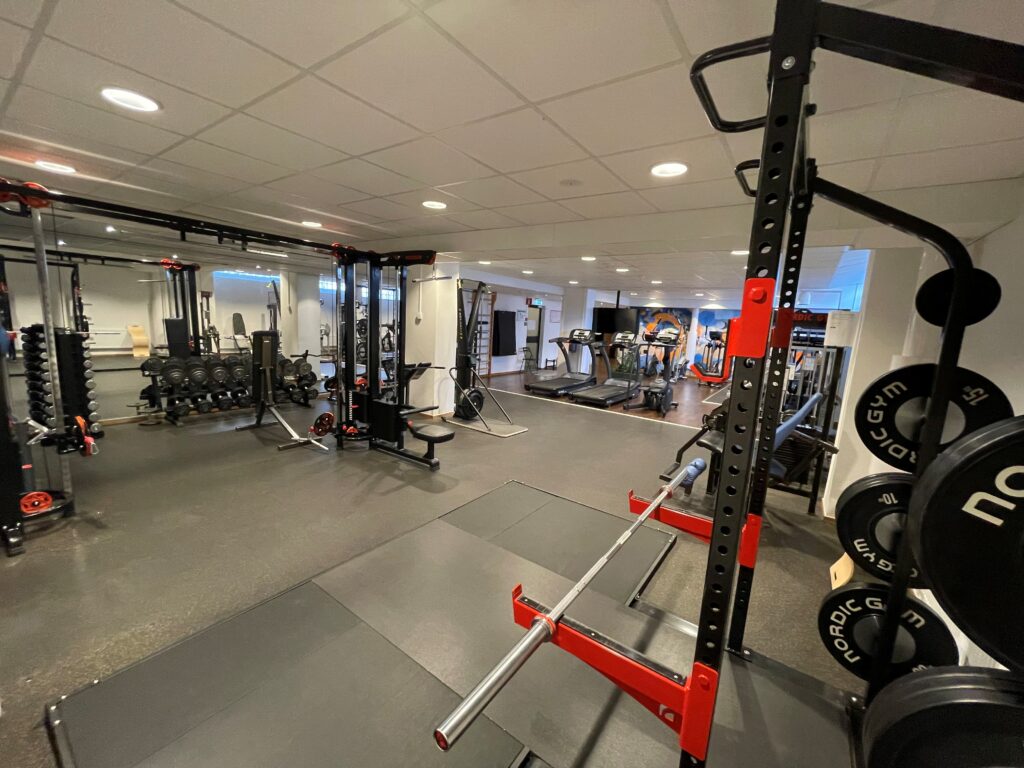
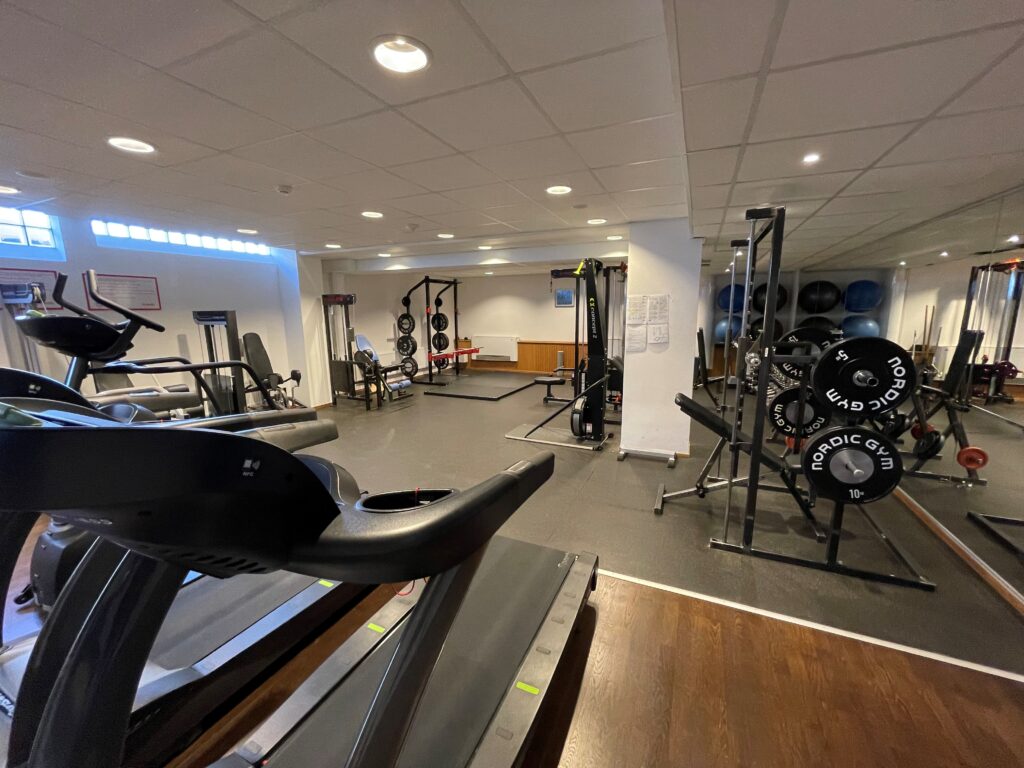
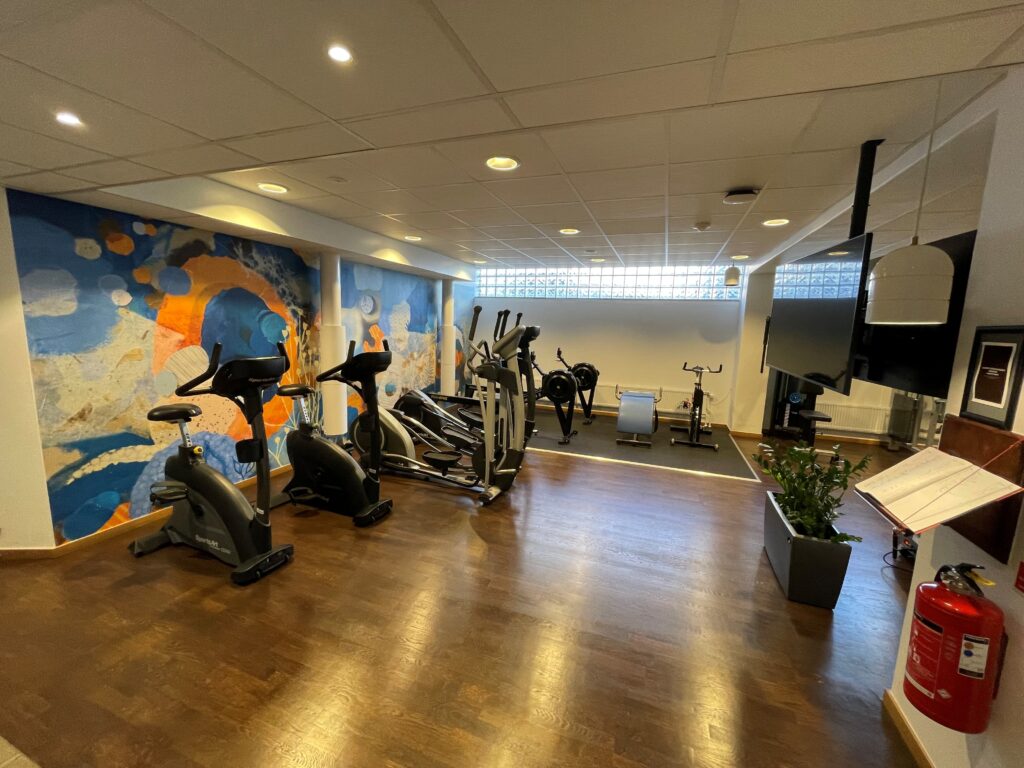
Gym
The gym caters mainly for seamen at work. If this is the case with you, you can also use the gym beyond opening hours. To do so, visit the hotel reception presenting a Club Card, which can be obtained at the Club. Hotel guests of The Seamen’s Hotel can also use the gym (during daytime as well as evenings). become a meber how to become a member. Retired sailors have access to the gym during the club's opening hours. Sjöfartshotellet's hotel guests also have access to the gym (applies to both day/evening).
Open 07–22 (07 AM – 10 PM)
Other facilities
The Boatswain Café
The Boatswain Café serves lighter meals such as pies, sandwiches and biscuits to go with the coffee.
Opening hours
Monday–Thursday 9.00–17.00
Friday 9.00–16.00.
Library
We have a small library, of course most of the books revolve around shipping. If you just want to sit and read your own book in peace and quiet, that's fine too.
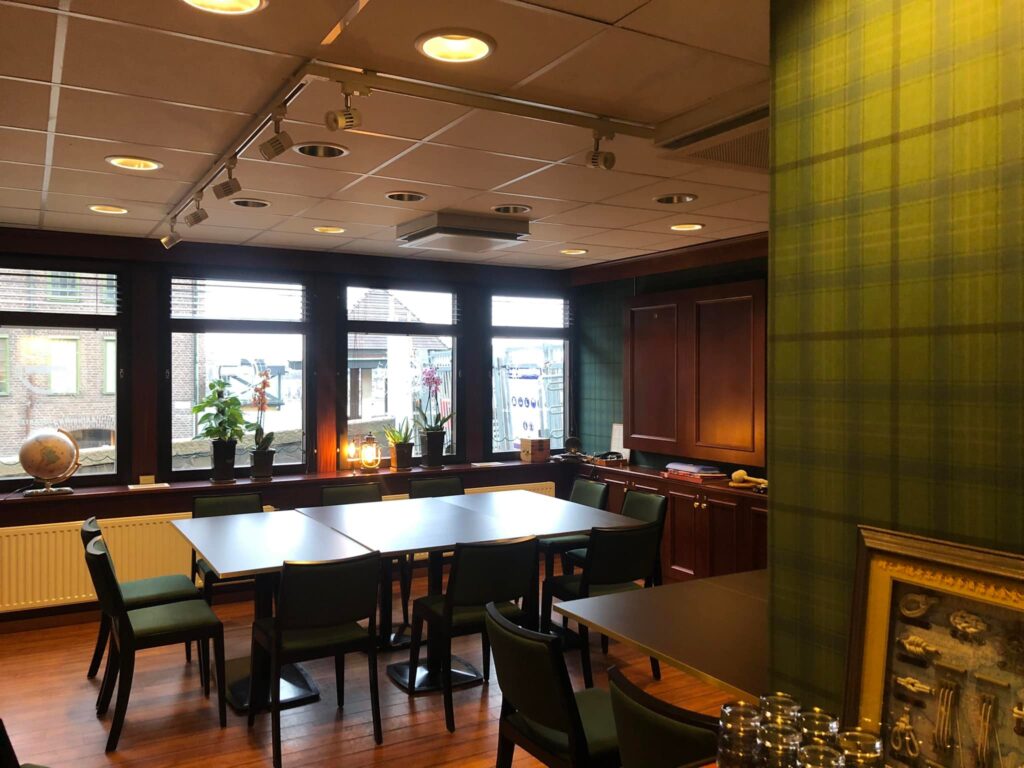
The library can also be used as a small conference room for companies in the shipping industry for a small cost.
Internet
We offer opportunities for international telephone calls (with a calling card) as well as free internet connection (WiFi) and access to desktop computers, printers and scanners.
Defibrillator
We have defibrillators for your safety.


From a sailor's mission…
During the 19th century, social misery grew in the slums of the cities and in the port districts of the coastal cities. Many people began to realize the great need for relief work, which existed not least in the free church movement. In 1879, a number of spiritually interested sea captains formed the Stockholm Seamen's Missionary Society with the task of missionary work among sailors in the Old Town. Initially, the work consisted of maintaining a seaman's missionary in the Old Town and making visits on board the boats.
...to housing options
In 1881, an apartment was purchased in one of the old properties down at Stadsgården. Initially 2 rooms and a kitchen, which in 1882 was expanded to a dining room and 5 lodgings (Stockholms Sjömanshem).
Through a grant from King Oscar II, a new board was formed with the task of organizing a new Seamen's Home. By 1891, so much money had been collected that the board was able to purchase the property at Slussen (right next to the subway station) and renovate it into a Seamen's Home, which was gradually expanded to 160 beds.
Better conditions for seafarers in port
At the beginning of the 20th century, when social conditions for people in general began to improve, it was realized that something had to be done for sailors in port as well. Above all, the housing conditions needed to be reviewed and lively discussions began. As a consequence of these, the Stockholm City Council decided on 20 November 1941 to establish the Stockholm Seamen's Home Committee. The task was to "investigate the possibilities for the city's participation in arranging seamen's home activities in such a way that cooperation is achieved regarding seamen's care in Stockholm. The central issue concerned the seamen's housing conditions". Thus the origin of the Stockholm Maritime Hotel Foundation.
Among other things, as a result of the city's decision, the state also appointed an investigation into welfare arrangements for seafarers in port immediately after the war - the 1946 Seafarers' Committee.
On April 15, 1947, the 1946 Seafarers' Committee submitted its report to the ministry, "Welfare arrangements for seafarers in port" (SOU 1947:29).
The report described the situation of seafarers in port and the great need for interventions in the form of social measures and leisure activities that were needed to improve the entire social situation for this professional group.
As a direct consequence of the report, the Merchant Navy Welfare Council was established in 1948 (later the Merchant Navy Culture and Leisure Council), which came to be largely devoted to leisure activities and services for seafarers in the ports. The council has since been discontinued and the operations have been included as of 1 January 2007 as part of the Swedish Maritime Administration – Seafarers' Service. In Stockholm, Seafarers' Service includes the leisure facility Sjömansklubben Kaknäs, on northern Djurgården.
A very important part of the report was the description of the housing situation for seafarers. In Stockholm, a very large part of the housing needs for seafarers were solved through subletting and boarding rooms as well as through the 80 beds at the Seafarers' Home (at Slussen) and through various temporary accommodation.
In a letter to the city council on June 28, 1961, the Seamen's Home Committee presented a proposal for arranging a maritime hotel in the Prinsen neighborhood at Katarinavägen/Glasbruksgatan.
A new maritime hotel
The proposal was that a maritime hotel with 200 beds and a restaurant and spaces for leisure activities would be built within the framework of a specially formed foundation. The foundation's construction costs would be financed through a collaboration between the City, the Stockholm Seamen's Home Foundation and the Merchant Navy Welfare Council, as well as construction loans taken out by the foundation.
On November 20, 1961, the Stockholm City Council approved the committee's proposal and decided, among other things, to lease the plot of land at Prinsen 16 to the Foundation and approve the statutes for the Stockholm Maritime Hotel Foundation, as well as to approve the agreement reached with the Stockholm Seamen's Home Foundation regarding the city's takeover of the Seamen's Home at Slussen.
The statutes of the Stockholm Maritime Hotel Foundation were approved by the Governor's Office on May 18, 1962, and the hotel was completed and inaugurated on June 12, 1964.
A foundation for seafarers who dock in Stockholm
Staff
Volunteer
If you are interested in helping and being one of our volunteers, you are welcome to contact us. As a volunteer, you work voluntarily without financial compensation during the period January-May and October-December and in connection with our activities that go under the working name "Newsletter".